
Same Day Ingrown Toenails Appointments in Danbury & Plainville, CT.
Same-day appointments are available in both our Danbury and Plainville offices for ingrown toenails, as we know how painful these can be. There are limited spots, so schedule early online, and if there are no available online spots, call the office directly.
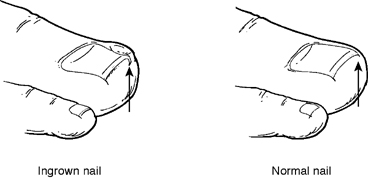
When a toenail is ingrown, it is curved and grows into the skin, usually at the nail borders (the sides of the nail). This “digging in” of the nail irritates the skin, often creating pain, redness, swelling, and warmth in the toe.
If an ingrown nail causes a break in the skin, bacteria may enter and cause an infection in the area, which is often marked by drainage and a foul odor. However, even if the toe isn’t painful, red, swollen, or warm, a nail that curves downward into the skin can progress to an infection.
Ingrown Toenail Causes
Causes of ingrown toenails include:
- Heredity: In many people, the tendency for ingrown toenails is inherited.
- Trauma: Sometimes an ingrown toenail is the result of trauma, such as stubbing your toe, having an object fall on your toe, or engaging in activities that involve repeated pressure on the toes, such as kicking or running.
- Improper trimming: The most common cause of ingrown toenails is cutting your nails too short. This encourages the skin next to the nail to fold over the nail.
- Improperly sized footwear: Ingrown toenails can result from wearing socks and shoes that are tight or short.
- Nail Conditions: Ingrown toenails can be caused by nail problems, such as fungal infections or the loss of a nail due to trauma.
Treating Ingrown Toenails
Sometimes, initial treatment for ingrown toenails can be safely performed at home. However, home treatment is strongly discouraged if an infection is suspected, or for those who have medical conditions that put feet at high risk, such as diabetes, nerve damage in the foot, or poor circulation.
Home care:
If you don’t have an infection or any of the above medical conditions, you can soak your foot in room-temperature water (adding Epsom salt may be recommended by your doctor), and gently massage the side of the nail fold to help reduce the inflammation.
Avoid attempting “bathroom surgery.” Repeated cutting of the nail can cause the condition to worsen over time. If your symptoms fail to improve, it’s time to see a foot and ankle surgeon.
Physician care:
After examining the toe, the foot, and the ankle, the surgeon will select the treatment best suited for you. If an infection is present, an oral antibiotic may be prescribed.
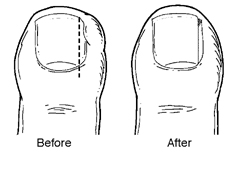
Sometimes a minor surgical procedure, often performed in the office, will ease the pain and remove the offending nail. After applying a local anesthetic, the doctor removes part of the nail’s side border. Some nails may become ingrown again, requiring removal of the nail root.
Following the nail procedure, a light bandage will be applied. Most people experience very little pain after surgery and may resume normal activity the next day. If your surgeon has prescribed an oral antibiotic, be sure to take all the medication, even if your symptoms have improved.
Preventing Ingrown Toenails
Many cases of ingrown toenails may be prevented by:
- Proper trimming: Cut toenails in a fairly straight line, and don’t cut them too short. You should be able to get your fingernail under the sides and end of the nail.
- Well-fitted shoes and socks: Don’t wear shoes that are short or tight in the toe area. Avoid shoes that are loose, because they too cause pressure on the toes, especially when running or walking briskly.
What You Should Know About Home Treatment
- Don’t cut a notch in the nail. Contrary to what some people believe, this does not reduce the tendency for the nail to curve downward.
- Don’t repeatedly trim nail borders. Repeated trimming does not change the way the nail grows and can make the condition worse.
- Don’t place cotton under the nail. Not only does this not relieve the pain, but it also provides a place for harmful bacteria to grow, resulting in infection.
- Over-the-counter medications are ineffective. Topical medications may mask the pain, but they don’t correct the underlying problem.
To find out more about the prevention and treatment of ingrown toenails, contact our podiatry team at Foot & Ankle Specialists of Connecticut, P.C. today in our Danbury, CT office at (203) 748-2220 or our Plainville, CT office (860) 747-2200.
At Foot and Ankle Specialist of Connecticut, we proudly serve patients from our Plainville office and surrounding communities, including Bristol, Farmington, New Britain, Southington, and throughout Hartford County, CT. Whether you need same-day treatment for ingrown toenails or heel pain, or foot surgery for painful bunions and hammertoes, our experienced team is here to provide high-quality foot and ankle care close to home.