
Flat Feet Care in Danbury And Plainville, CT
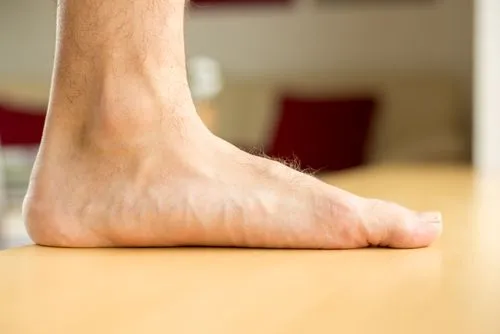
At Foot & Ankle Specialists of Connecticut, P.C., in Danbury and Plainville, CT, serving Bristol, Farmington, New Britain, and Southington, we help patients understand why their arches change and what steps relieve pain and protect mobility. Flat feet can develop in childhood and persist into adulthood, or they can appear later in life when the structures that support the arch weaken. Early evaluation helps us identify the cause and prevent progression that can lead to long-term tendon damage and arthritis.
What Flat Feet Mean
Flat feet occur when the arch of the foot sits lower than expected or collapses during standing and walking. Some people have flexible flat feet, where an arch appears when sitting or on tiptoe. Others develop a more rigid flattening that limits motion and increases strain on the ankle and midfoot. We determine which pattern you have because it affects treatment.
Common Causes and Risk Factors
Flat feet can come from genetics, ligament laxity, prior injuries, or chronic overuse. In adults, one of the most common causes is posterior tibial tendon dysfunction, also called adult acquired flatfoot. The posterior tibial tendon supports the arch, and changes in that tendon reduce arch stability and can worsen over time without care. Activities like running, walking, hiking, or climbing stairs can trigger symptoms when overuse stresses the tendon.
Signs That Suggest You Need An Evaluation
We often see symptoms evolve as the condition progresses. Early on, many patients notice pain and swelling along the inside of the foot and ankle, plus warmth or tenderness near the tendon. As the arch flattens, the ankle may roll inward and the toes may turn outward. In more advanced cases, pain can shift to the outside of the foot below the ankle, and arthritis can develop.
How We Diagnose The Cause
We evaluate your gait, alignment, flexibility, and tendon strength. We also pinpoint tenderness and assess how the arch behaves with weight-bearing. When needed, we use imaging to evaluate tendon changes, joint alignment, and arthritis risk so we can match treatment to the stage of the condition.
Treatment Options We May Recommend
We focus on reducing strain, restoring function, and preventing progression. Non-surgical care often includes custom orthotics or bracing for arch support, temporary immobilization in a boot when symptoms flare, targeted physical therapy, anti-inflammatory medications when appropriate, and shoe modifications to improve stability. If flat feet progress substantially or do not improve with conservative treatment, we discuss surgical options based on your anatomy and goals.
Schedule A Flat Feet Evaluation
If flat feet cause persistent pain, instability, or limit walking and exercise, we can help. Contact Foot & Ankle Specialists of Connecticut, P.C in Danbury and Plainville, CT, serving Bristol, Farmington, New Britain, and Southington. Call (203) 748-2220 for our Danbury office or (860) 747-2200 for our Plainville office to schedule an evaluation and review treatment options for flat feet.
Flat Foot from Officite on Vimeo.
What Is PTTD?
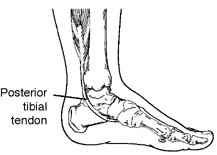 The posterior tibial tendon serves as one of the major supporting structures of the foot, helping it to function while walking. Posterior tibial tendon dysfunction (PTTD) is a condition caused by changes in the tendon, impairing its ability to support the arch. This results in flattening of the foot.
PTTD is often called “adult acquired flatfoot” because it is the most common type of flatfoot developed during adulthood. Although this condition typically occurs in only one foot, some people may develop it in both feet. PTTD is usually progressive, which means it will keep getting worse, especially if it isn’t treated early.
Causes
Overuse of the posterior tibial tendon is often the cause of PTTD. In fact, the symptoms usually occur after activities that involve the tendon, such as running, walking, hiking, or climbing stairs.
Symptoms
The symptoms of PTTD may include pain, swelling, a flattening of the arch, and an inward rolling of the ankle. As the condition progresses, the symptoms will change.
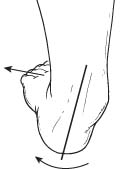 For example, when PTTD initially develops, there is pain on the inside of the foot and ankle (along the course of the tendon). In addition, the area may be red, warm, and swollen.
Later, as the arch begins to flatten, there may still be pain on the inside of the foot and ankle. But at this point, the foot and toes begin to turn outward and the ankle rolls inward.
As PTTD becomes more advanced, the arch flattens even more and the pain often shifts to the outside of the foot, below the ankle. The tendon has deteriorated considerably and arthritis often develops in the foot. In more severe cases, arthritis may also develop in the ankle.
Non-surgical Treatment
Because of the progressive nature of PTTD, early treatment is advised. If treated early enough, your symptoms may resolve without the need for surgery and progression of your condition can be arrested.
In contrast, untreated PTTD could leave you with an extremely flat foot, painful arthritis in the foot and ankle, and increasing limitations on walking, running, or other activities.
In many cases of PTTD, treatment can begin with non-surgical approaches that may include:
- Orthotic devices or bracing. To give your arch the support it needs, your foot and ankle surgeon may provide you with an ankle brace or a custom orthotic device that fits into the shoe.
- Immobilization. Sometimes a short-leg cast or boot is worn to immobilize the foot and allow the tendon to heal, or you may need to completely avoid all weight-bearing for a while.
- Physical therapy. Ultrasound therapy and exercises may help rehabilitate the tendon and muscle following immobilization.
- Medications. Nonsteroidal anti-inflammatory drugs (NSAIDs), such as ibuprofen, help reduce the pain and inflammation.
- Shoe modifications. Your foot and ankle surgeon may advise changes to make with your shoes and may provide special inserts designed to improve arch support.
When Is Surgery Needed?
In cases of PTTD that have progressed substantially or have failed to improve with non-surgical treatment, surgery may be required. For some advanced cases, surgery may be the only option. Your foot and ankle surgeon will determine the best approach for you.
At Foot and Ankle Specialist of Connecticut we proudly serve patients from our Plainville office and surrounding communities including Bristol, Farmington, New Britain, Southington and throughout Hartford County, CT. Whether you need same-day treatment for ingrown toenails or heel pain, or foot surgery for painful bunions and hammertoes, our experienced team is here to provide high-quality foot and ankle care close to home.